


A design studio I used to know in USA lost almost everything one Tuesday afternoon. Nothing dramatic, no break-in, no virus. Just one desktop computer that held every client file, every invoice, every finished project, and a building with faulty wiring.
The desktop fried. That was it. No backup sitting anywhere else, because why would there be, everything had always just lived on that one machine.
Three years of work, gone in maybe ten minutes. The founder told me afterward that losing the files wasn’t even the part that stung most. It was realizing how casually they’d handed an entire business over to one box, in one room, that could die on any random Tuesday.
That story is basically the whole case for cloud computing, minus the jargon. Stop trusting one machine in one room. Put your stuff somewhere that genuinely does not care whether your office loses power, your laptop gets stolen off a café table, or your hard drive just quietly decides today is the day.
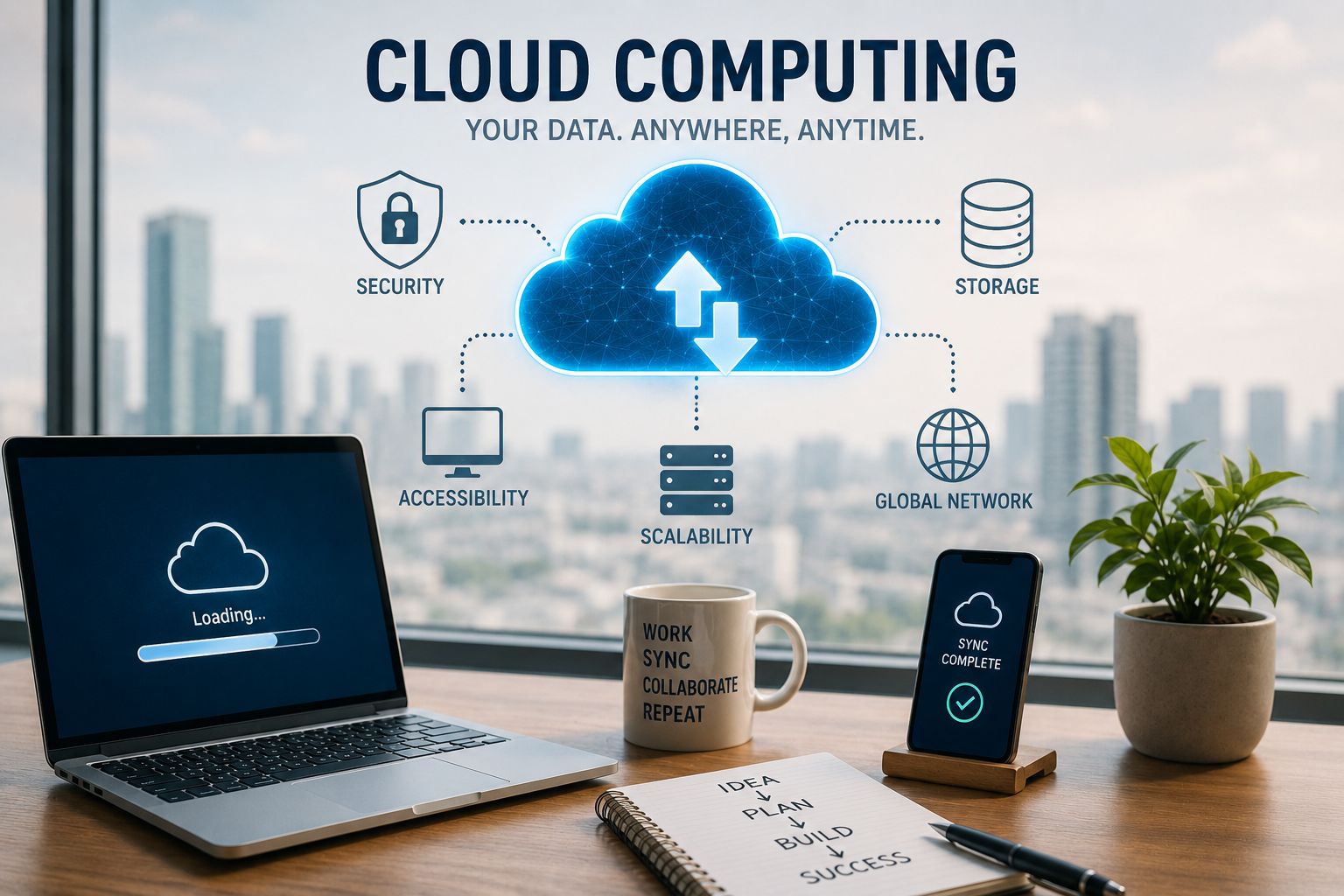
People make cloud computing sound complicated, and honestly, companies sort of benefit from keeping it that way. But strip out the buzzwords and it’s a pretty simple idea. Instead of running everything on your own machine, you rent computing power, storage, and software from someone else’s enormous data center, and you reach it over the internet.
Let’s actually get into it, and where beginners tend to trip.
What Cloud Computing Actually Is, Minus the Buzzwords
Think about Netflix for a second. You don’t own the movies sitting in that app. There’s no hard drive in your living room stacked with films. You log in, and somewhere far away, on servers you’ll genuinely never lay eyes on, the content just plays.
Cloud computing runs on the same idea, just applied to computing power and storage instead of movies. Amazon Web Services, Microsoft Azure, Google Cloud, these are the three heavyweights doing this at a massive scale. Giant warehouses of servers, and businesses (or regular people) rent out a slice of that power instead of buying their own hardware and babysitting it.
So the next time your bank app loads instantly, or some startup launches a full website overnight without ever touching a physical server, that’s cloud computing doing the quiet, invisible work underneath.
The Three Flavors Nobody Bothers Explaining Simply
Most articles just throw IaaS, PaaS, SaaS at you and assume it clicks. It doesn’t, not on the first read anyway. Here’s the plain version.
Infrastructure as a Service is basically renting an empty apartment. You get the space, electricity, water hookup, but you’re bringing your own furniture and figuring out the layout yourself. Amazon EC2 is the classic example here, raw computing power, and you build whatever you want on top of it.
Platform as a Service is closer to a furnished apartment. Someone’s already handled part of the setup, so you can focus on the actual thing you’re building instead of wrestling with server configuration all day.
Software as a Service is the one everybody already uses without ever thinking about the label. Gmail. Zoom. Netflix. Even Canva. You install nothing, manage no servers, just open it and get on with your day. The backend is entirely someone else’s headache.
A Beginner Mistake That Costs Actual Money
I’ve watched more than one small business owner sign up for a cloud server, leave it running around the clock for a project that only needed a couple hours of testing, and then open a bill that made their stomach drop.
Cloud pricing is usually pay-as-you-go, which sounds great right up until it also becomes pay-as-you-forget. A server left running over a long weekend, sitting completely idle, is still quietly racking up charges the whole time.
A freelancer I know in Lahore set up a cloud database for a client, tested it for two days, got pulled into other work, and just forgot it existed. Three weeks later he checked his account and found a bill well over a hundred dollars, for a database literally nobody had touched since day two.
The lesson here is almost too simple to feel real: shut off what you’re not using. Most providers let you pause resources, not just delete them outright, so there’s genuinely no excuse for leaving the meter running while you’re not even looking at it.
Why Startups Everywhere Chose Cloud Over Buying Their Own Servers
Before cloud computing went mainstream, starting a serious tech company meant physically buying servers, finding somewhere cool enough to keep them, and hiring someone just to maintain the hardware. That’s real money and real effort spent before you’ve even proven the idea works.
Cloud computing flipped all of that. Now a two-person startup working out of Islamabad can spin up the exact same infrastructure a company in San Francisco is running, pay only for what actually gets used that month, and scale up instantly the moment things take off.
This might be one of the quietest, biggest levellers in modern tech. A small ecommerce shop out of Faisalabad and a similarly sized one in Ohio can both run on identical cloud infrastructure, paying by usage instead of needing to raise real money just for hardware neither of them could easily afford a decade ago.
The Security Question People Usually Get Wrong
A lot of people assume keeping data “on the cloud” is riskier than just keeping it on their own laptop. It’s mostly the opposite, and this one trips up more beginners than anything else on this list.
Major cloud providers pour enormous money into physical security, encryption, and redundancy that an individual or small business simply can’t match on their own. Your laptop doesn’t have three backup copies of your files sitting quietly in three different cities. A properly set up cloud account usually does, without you even thinking about it.
That said, cloud isn’t some magic force field either. Plenty of data leaks happen not because the provider got hacked, but because someone misconfigured their own settings, leaving a storage bucket wide open when it should’ve stayed private. The tool’s only as safe as the person setting it up, same as anything else.
If you want a deeper, more technical walkthrough of how this all fits together, WiredSight put together a fairly thorough breakdown of the whole ecosystem, worth a read once you’re past the basics covered here.
How Pakistan and South Asia Fit Into the Global Cloud Picture
For years, businesses in Pakistan leaned hard on local hosting providers, mostly because international cloud services felt expensive or the payment side was a mess without a proper international card. That’s shifted a fair bit. AWS, Google Cloud, and Azure now all support payments through Pakistani banks and cards far more smoothly than they did even five years back.
There’s still a real gap in how people actually access these services though. In the US or UK, a developer just pulls out a company card and signs up in a few minutes. In Pakistan, freelancers and small business owners often route through platforms built to handle local payment methods, or partner with an agency that already has an international setup sorted, not unlike how someone might use a local workaround to reach a service that was never really built with their market in mind first.
The good part is the technology itself doesn’t care where you’re logging in from. A server rented from Google Cloud runs exactly the same whether the person managing it is sitting in Seattle, or in a small office off Gulberg, Lahore.
What Beginners Should Actually Do First
Nobody needs to become a cloud architect overnight. A few small, sensible habits go a long way here.
- Start with a free tier. AWS, Google Cloud, and Azure all offer free usage limits, plenty to learn the basics without spending a rupee or a dollar.
- Set up billing alerts before you touch anything else. This alone would’ve saved that freelancer in Lahore a nasty surprise.
- Turn off or pause anything you’re not actively using, especially test servers and databases.
- Enable two-factor authentication on your cloud account. These things often hold an entire business’s worth of data, and they’re a prime target.
- Pick one provider and actually learn it properly, instead of jumping between three platforms and understanding none of them well.
For anyone building something real on top of this, it’s worth seeing how other developers structure their cloud setups from day one instead of fixing mistakes after the fact. WiredSight’s Cloud & DevOps section keeps up ongoing coverage of exactly that kind of practical, hands-on ground, useful if you want to keep learning past this point.
The Bigger Picture
Cloud computing isn’t some futuristic concept anymore, if it ever really was. It’s already the quiet infrastructure sitting behind almost everything people touch daily, from a small photography portfolio running on a free tier to national banking systems processing millions of transactions without most people ever thinking about where any of it actually lives.
What really changed the game wasn’t the technology alone. It was that renting a slice of someone else’s massive data center became cheaper and easier than owning your own hardware, whether you’re a solo founder in USA
or a Fortune 500 company with a whole IT department.
That design studio never fully got its old files back. But the founder told me the one good thing to come out of it was finally moving everything, invoices, project files, backups, onto a proper cloud setup. Costs them a few dollars a month now. Would’ve cost basically nothing to set up years earlier, if only they’d known how simple it actually was.
